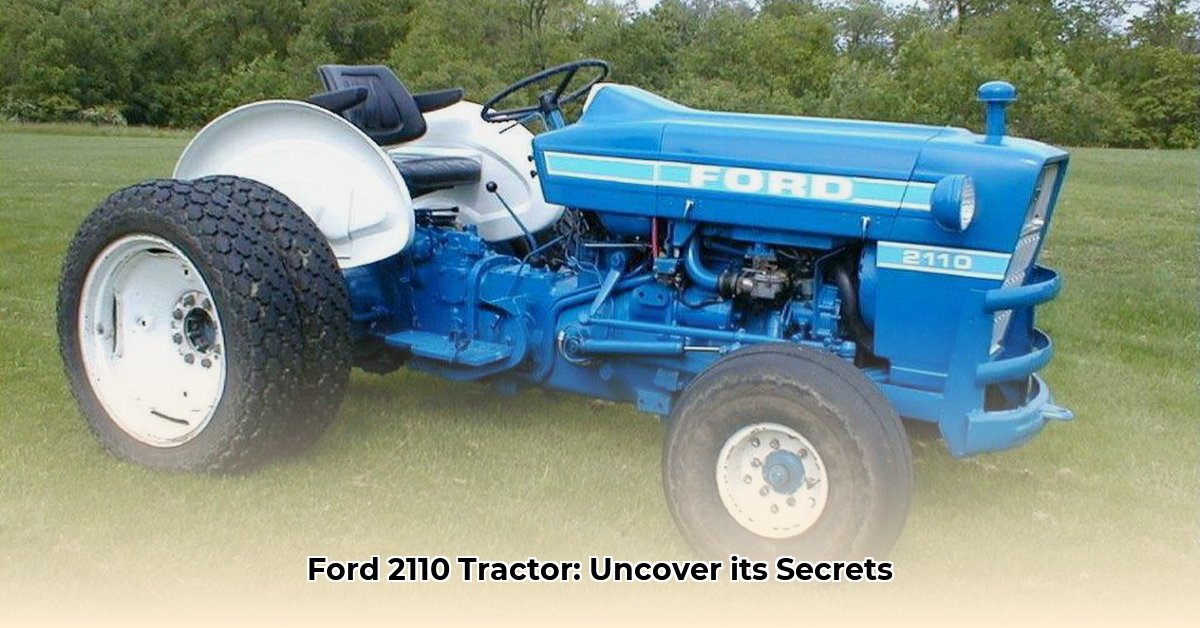
The Ford 2110: a compact tractor with a surprisingly rich history. Whether you're a seasoned collector, a potential buyer, or a current owner, understanding its specifications is key to maximizing its potential and appreciating its legacy. This guide provides a comprehensive overview, blending technical details with practical advice.
Under the Hood: Engine and Powertrain
The Ford 2110's engine, typically a Shibaura-built diesel, delivers approximately 38 horsepower. The exact number of cylinders (frequently debated among enthusiasts) remains uncertain, with some sources citing three and others four. This powerful engine drives a 12-forward, 4-reverse gearbox; however, whether the gearbox is fully synchronized is another point of ongoing discussion among collectors. The simple spur gear final drive, while less sophisticated than modern designs, contributed significantly to the tractor's enduring reputation for reliability. Isn't it fascinating how even seemingly simple aspects can spark so much lively debate among enthusiasts?
Dimensions and Weight: Sizing Up the 2110
Precise measurements for the Ford 2110 are difficult to obtain consistently. Variations in length, width, height, and weight exist due to differing modifications and attached equipment across various models. For accurate figures, consulting original documentation is crucial. If originals are unavailable, engaging with experienced owners is an excellent alternative. This difficulty in finding consistent information highlights the unique challenges of researching vintage machinery.
Hydraulics and Three-Point Hitch: Lifting Power
The Ford 2110 utilizes an open-center hydraulic system, functional but less efficient than the closed-center systems of newer tractors. The tractor features a Category I three-point hitch, the standard system for attaching various implements. Determining the precise lifting capacity, however, proves challenging due to inconsistent documentation. This makes careful consideration of tasks crucial before use.
Available Attachments: Expanding the 2110's Capabilities
The Ford 2110's versatility expands significantly with attachments such as snow blowers, front-end loaders, and backhoes. These implements dramatically increased its functionality, allowing it to tackle a broader range of tasks. The quest for these increasingly rare attachments adds to the allure and challenge for both collectors and users. What attachment would best suit your needs and geographic location?
Sourcing Information and Parts: A Collector's Journey
Finding complete and accurate specifications for the Ford 2110 can be a rewarding, yet challenging endeavor. Original Ford documentation is scarce, underscoring the value of online forums and vintage tractor communities. Connecting with fellow owners frequently yields the most reliable firsthand information.
A Collector's Perspective: Beyond the Specs
For collectors, the technical specifications are only one piece of the puzzle. A tractor's history, condition, and the availability of original attachments heavily influence its value. A thorough pre-purchase inspection is essential, akin to acquiring a classic car. You're investing in a piece of history, with all its unique characteristics.
Restoring a Ford 2110: A Rewarding Undertaking
Restoring a Ford 2110 is a labor of love. Begin with a comprehensive condition assessment to determine necessary parts. Sourcing these parts often proves the most time-consuming aspect, requiring resourcefulness and leveraging online communities. Creative solutions and even fabrication might be necessary to complete a restoration.
Utilizing a Ford 2110 Today: Practical Applications
Despite its age, the Ford 2110 remains capable of handling various light-duty tasks such as tilling, mowing, or light hauling. However, understanding its limitations is paramount before undertaking larger projects. Remember, it’s a vintage machine, and its performance reflects age and wear.
Ford 2110 Tractor Specs: A Balanced Perspective
| Feature | Pros | Cons |
|---|---|---|
| Engine | Dependable Shibaura diesel; relatively simple design. | Lower horsepower; struggles with heavier tasks. |
| Transmission | 12 forward/4 reverse gears; offers flexibility. | Synchronization may be unreliable; older technology. |
| Hydraulic System | Simple open-center system. | Less efficient than modern systems. |
| Attachments | Wide range available; expands capabilities. | Finding originals can be challenging & expensive. |
| Parts Availability | Some parts available through specialty suppliers. | Many parts are increasingly scarce. |
Owning a Ford 2110 is a journey that balances technical understanding with resourcefulness and patience. This guide serves as a valuable resource on your path to appreciating and utilizing this classic machine.
How to Find Replacement Parts for a Ford 2110 Tractor
Maintaining a Ford 2110 frequently requires locating specific parts. This section outlines effective strategies for finding replacement components.
Assessing Your Needs: The First Step
Before searching, carefully examine the required parts. Take detailed photos and note part numbers (if possible). Consult the owner's manual for diagrams and information.
Locating Ford 2110 Parts: A Step-by-Step Guide
Online Retailers: Start with websites specializing in classic tractor parts. Utilize specific search terms and carefully review vendor feedback.
Local Dealers & Mechanics: Experienced mechanics might have access to parts or know reliable suppliers. Networking with other Ford 2110 owners is also beneficial.
Salvage Yards: Tractor salvage yards are potential sources for used parts. Thoroughly inspect any used part for wear and tear.
Manufacturer's Resources: While less likely due to age, resources might exist on Ford's website or through authorized dealers.
Effective Sourcing Strategies for Ford 2110 Parts
- Always use the correct part number.
- Explore cross-referencing with parts from similar models.
- Carefully inspect the condition of used parts.
- Factor in shipping costs.
- Maintain a basic inventory of vital parts.
The Environmental Impact: Sustainable Practices
Reusing and repairing prolongs your tractor’s life, reducing manufacturing's environmental impact. Each reused part contributes to sustainable farming practices. Repairing yourself or using local skilled labor further minimizes the environmental footprint.